Tel:13506427476
  Email:13506427476@139.com


Resistivity reducing agent
Resistivity reducing agent
1、 Product Introduction
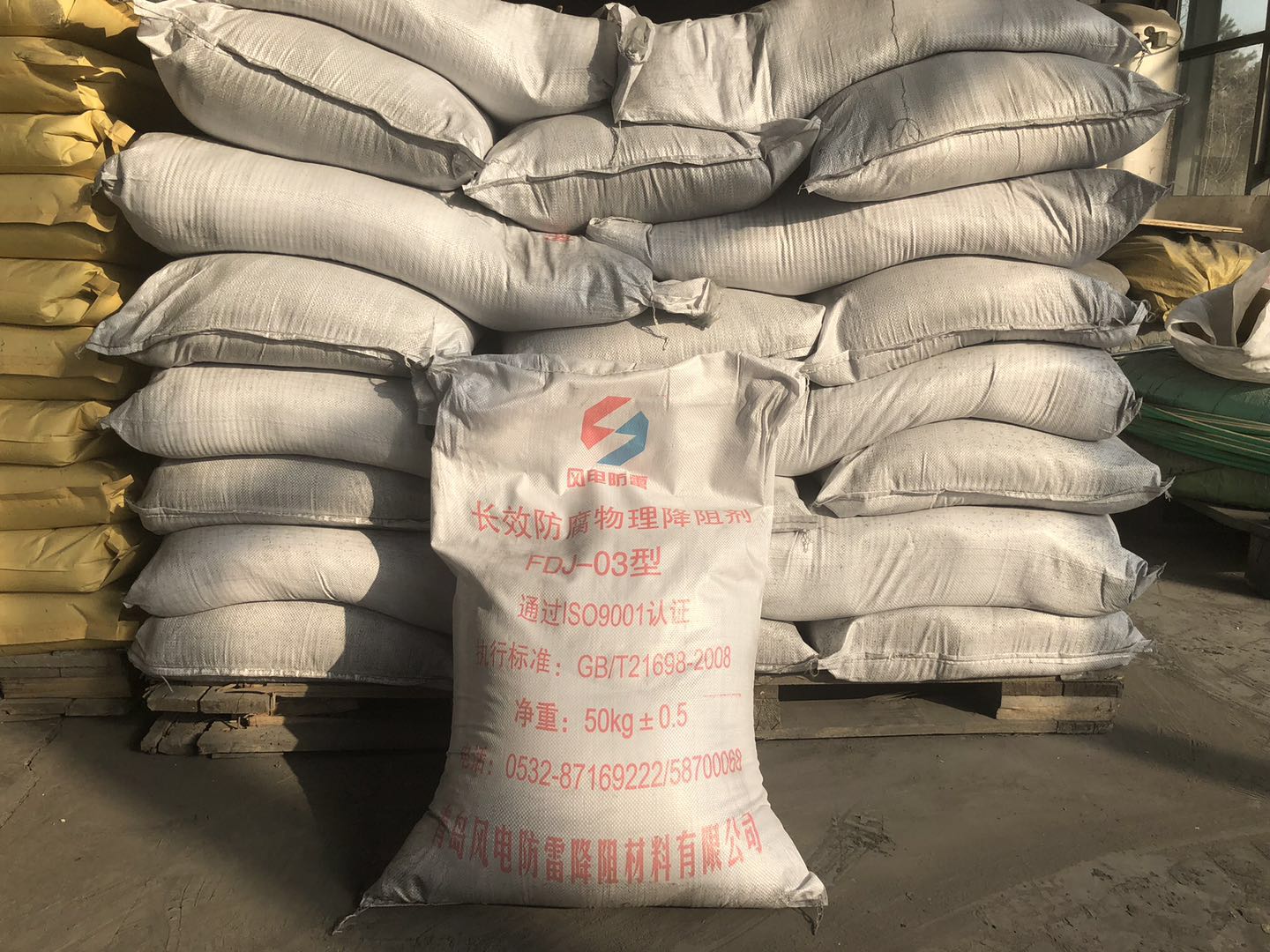
Long term anti-corrosion physical resistance reducing agent is a new type of water-based pure electronic conductive composite resistance reducing agent developed by the company's R&D personnel by drawing on advanced foreign technology, summarizing the experience of resistance reducing agents in engineering applications, comprehensively considering the electrical performance, corrosion resistance, long-term stability, and mechanical properties of resistance reducing agents, and using graphite as the main raw material. This resistance reducing agent overcomes many common disadvantages of resistance reducing agents, such as increasing electrical resistivity with decreasing water content and easy loss due to groundwater erosion.
2、 Principle of Resistance Reduction
Long term anti-corrosion physical resistance reducing agent is composed of various components, including fine graphite, bentonite, curing agent, lubricant, conductive cement, etc. It is a good conductor, which can be used between the grounding body and the soil. On the one hand, it can be in close contact with the metal grounding body, forming a sufficiently large current flow surface; On the other hand, it can infiltrate into the surrounding soil, reduce the electrical resistivity of the surrounding soil, and form a low resistance area with gentle changes around the grounding body.
3、 Product Features
1. Due to its low electrical resistivity, high water absorption and retention, it has a stable resistance reducing effect.
2. Resistance reducing agents have good anti-corrosion and stability properties, and have a good protective effect on grounding grids, thus having good long-term effectiveness
3. Resistance reducing agents have excellent impact characteristics and voltage equalization effects, which can not only reduce power frequency grounding resistance, but also reduce impact grounding resistance.
4. Resistance reducing agents not only have a significant resistance reducing effect on small and medium-sized grounding grids, but can also have a certain resistance reducing effect on large grounding grids as long as they are treated properly. More importantly, their anti-corrosion and pressure equalization effects will also bring good benefits.
4、 Application scope
Long term anti-corrosion physical resistance reducing agents are widely used in various fields of the national economy. It is used in electrical grounding devices in industries such as power, telecommunications, construction, broadcasting, television, railways, highways, aviation, water transportation, national defense and military industry, gold mining, coal, petroleum, chemical industry, textile, medical and health, cultural education, etc.
5、 Construction method
1. Pre construction inspection items and requirements:
① The drag reducer should be a product of the same brand and model.
② The water is clean and free of pollution, and there are no impurities such as sediment in the water.
③ The size and shape of the grooves and holes meet the design requirements, with relatively flat walls and no debris inside the holes and grooves.
④ The vertical grounding electrode is placed in the center of the hole, and the horizontal grounding electrode is horizontally centered, with a distance of not less than 40mm from the bottom of the ditch and relatively uniform (if necessary, it can be fixed with a thin wire).
⑤ The grounding down conductor has been coated with anti rust paint according to the design requirements and has initially set.
2. Modulation of drag reducing agent
Add water in a weight ratio of 0.4~0.6:1.0 of water to drag reducer and stir thoroughly until a sticky paste is formed. The amount of water used for horizontal grounding should be just enough to wet all the dry powder and stir it into a paste. The amount of resistance reducing agent added to the vertical grounding hole can be adjusted to a higher value depending on the situation. Excessive water addition will prolong the construction time.
3. Watering, wrapping, and initial inspection
Gently pour the prepared paste like resistance reducing agent into the grounding ditch and hole (to prevent mud, debris, and impurities from mixing into the resistance reducing agent) until it completely covers the grounding electrode without omission. The initial coating thickness should not be less than 40mm, and the walls of the borehole should be full. If it is insufficient, it should be replenished.
4. Re inspection and backfilling compaction
After the initial setting of the drag reducing agent, a detailed inspection should be carried out to ensure that the surface of the drag reducing agent coating is uniform, sufficient, and free of impurities. The thinnest part of the coating body should not be less than 40mm, and if it is insufficient, the drag reducing agent should be replenished. After checking for accuracy, remove the fixed fine wire, gently backfill with fine soil without hard objects or branches, with a thickness of at least 20mm, and then add other soil and compact it. The compacted backfill soil surface should be slightly higher than the surrounding ground level.
5. Requirements for grounding down conductors
The grounding down conductor at the surface junction section needs to be coated with 2-3 coats of epoxy asphalt varnish, FVC paint or other durable paint throughout the entire section. The length of the underground section should be such that the part buried with the resistance reducing agent is not less than 20mm, and the length of the upper part on the surface is not less than 30mm.
6. Deep well grounding
Deep well grounding is sometimes necessary. The depth of a well is usually determined by finding a low resistivity formation or groundwater, usually up to tens of meters. During construction, specialized machinery is used to drill holes with a diameter of 80-150mm. Sometimes, local blasting is required to loosen the surrounding soil and fill it with a drag reducing agent to enhance the drag reduction effect. The grounding electrode is made of steel pipes with drilled holes ranging from 10 to 15mm on all four walls. Inject the prepared resistance reducing agent into the pipe under pressure, and use the wall hole to surround the steel pipe from both inside and outside and fill the entire borehole with the resistance reducing agent.
6、 Precautions
1. Long term anti-corrosion physical resistance reducing agent should be evenly applied around the grounding body without any disconnection phenomenon.
2. To prevent electrochemical corrosion caused by different potentials, asphalt paint (anti-corrosion paint) should be applied for transition treatment at the connection between the application and non application of resistance reducing agents.
3. This product is non-toxic and pollution-free. If the powder splashes onto hands, face, or eyes during operation, it can be washed with laundry detergent or soap.
4. The product should be strictly protected from moisture and stored in a dry and ventilated place that is not exposed to rain.